
Prime Rib Recipe
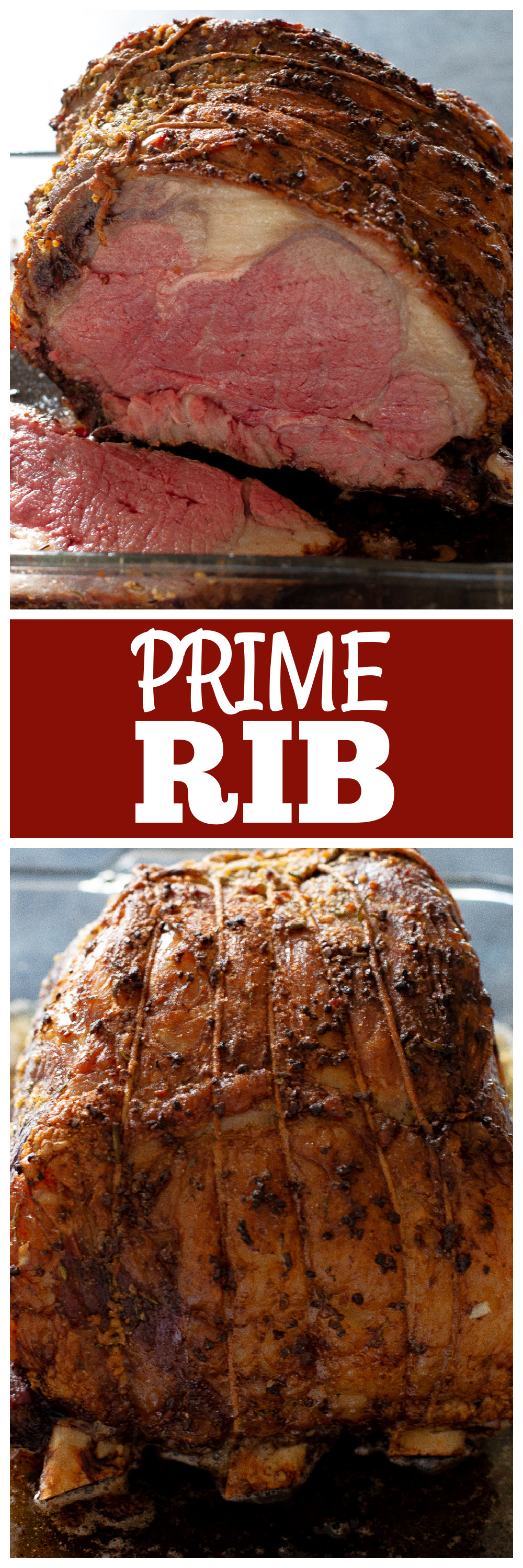
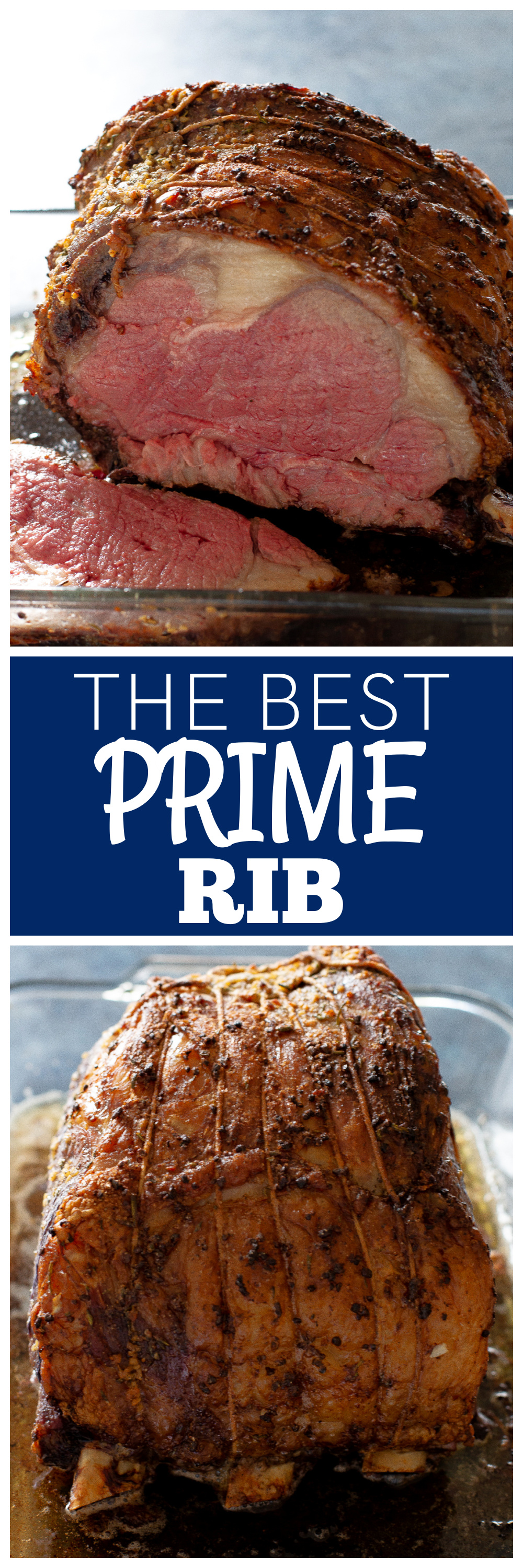
This delicious Prime Rib recipe is made with a simple herbed butter and slow cooked to perfection. Make this beef delight for a special occasion!
I may earn commissions for purchases made through links on this post.
PRIME RIB ROAST RECIPE
There’s something about prime rib that screams that this is a special dinner. This is the one you save for Christmas, New Year’s Eve, or that birthday when somebody really deserves it.
I’ll be honest: the first time I bought a prime rib, it was super intimidating. That is a lot of money sitting on your counter, and the last thing you want is an overcooked roast.
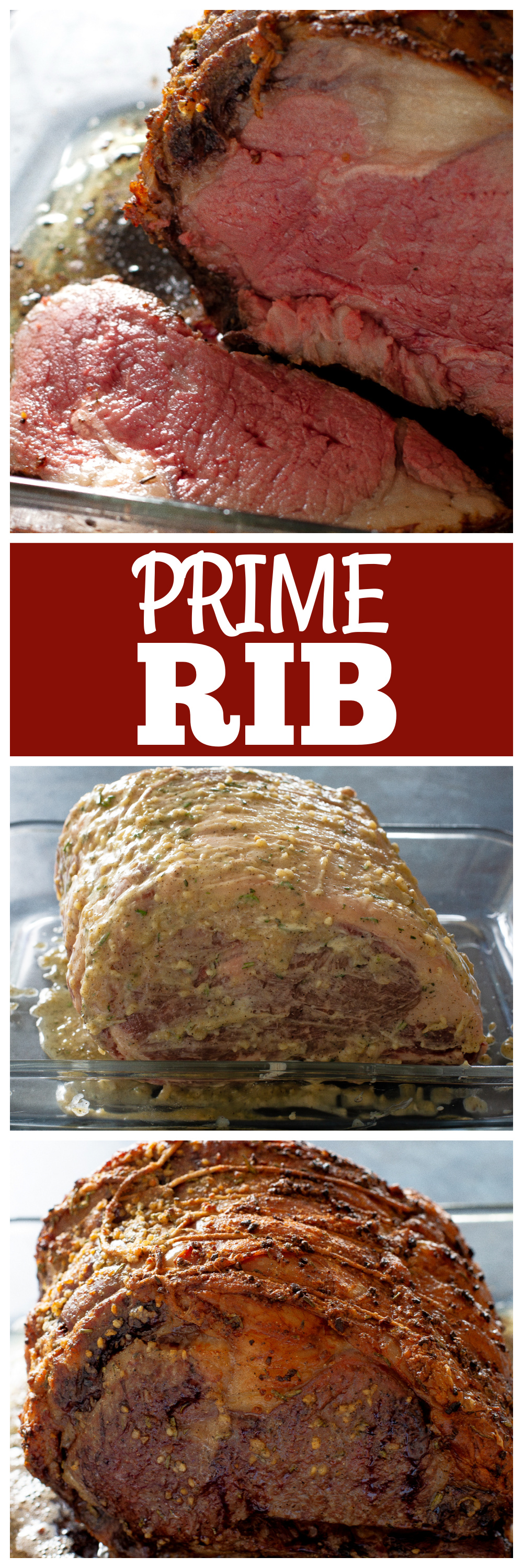
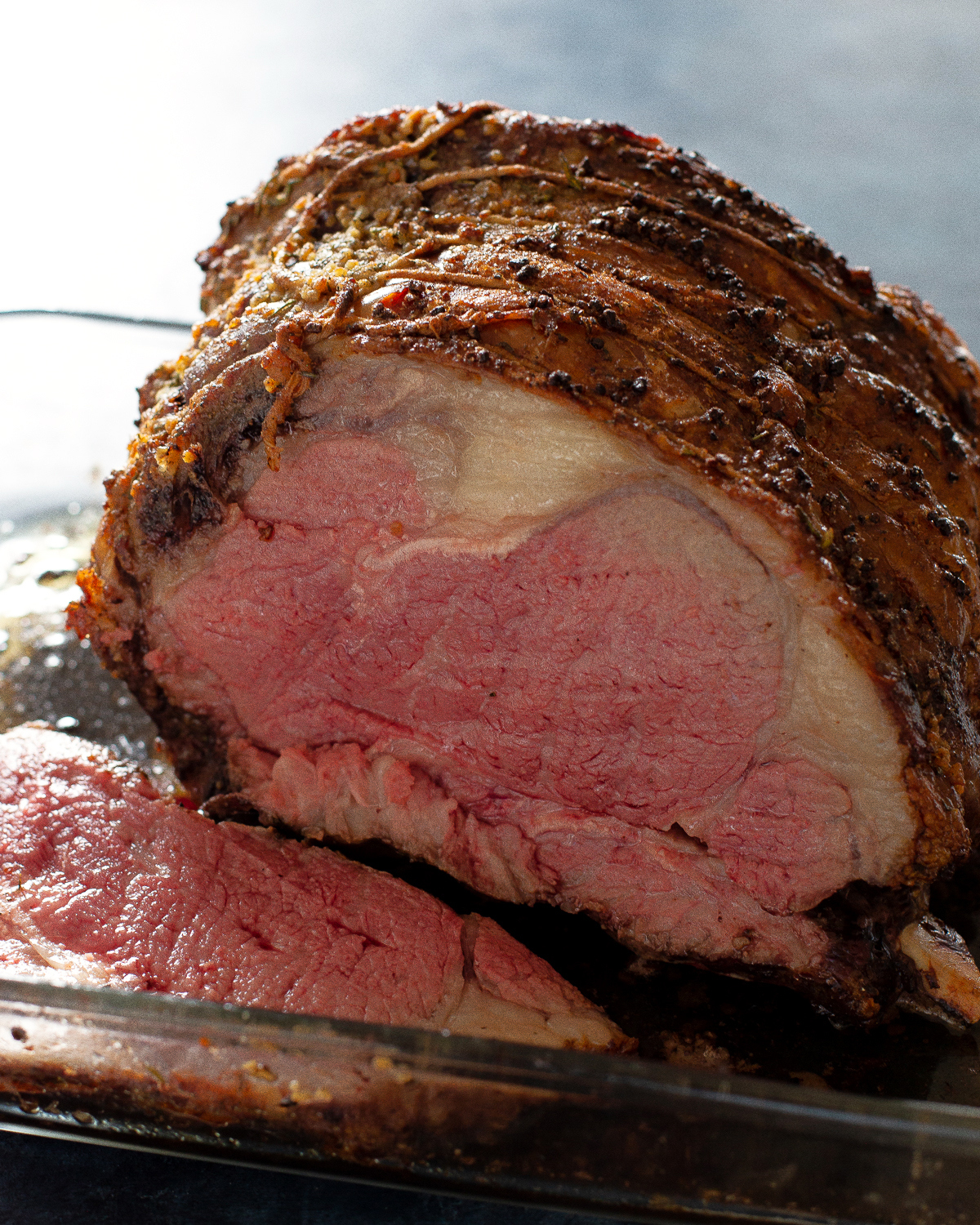
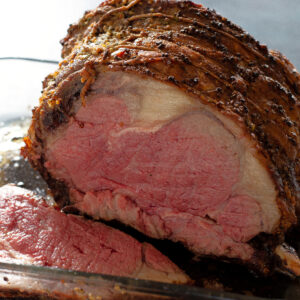
After years of making it for my family, I can tell you this prime rib recipe is about as foolproof as it gets. A quick blast of heat to get a crust then low and slow in the oven. You get a gorgeous garlic herb crust with juicy, rosy-pink beef from edge to edge.
No fancy equipment. No stress. Just one very good meat thermometer and a little patience.
Why you’ll love this prime rib
- It’s nearly impossible to overcook. Roasting at a low temperature gives you a big window to pull it at the perfect moment.
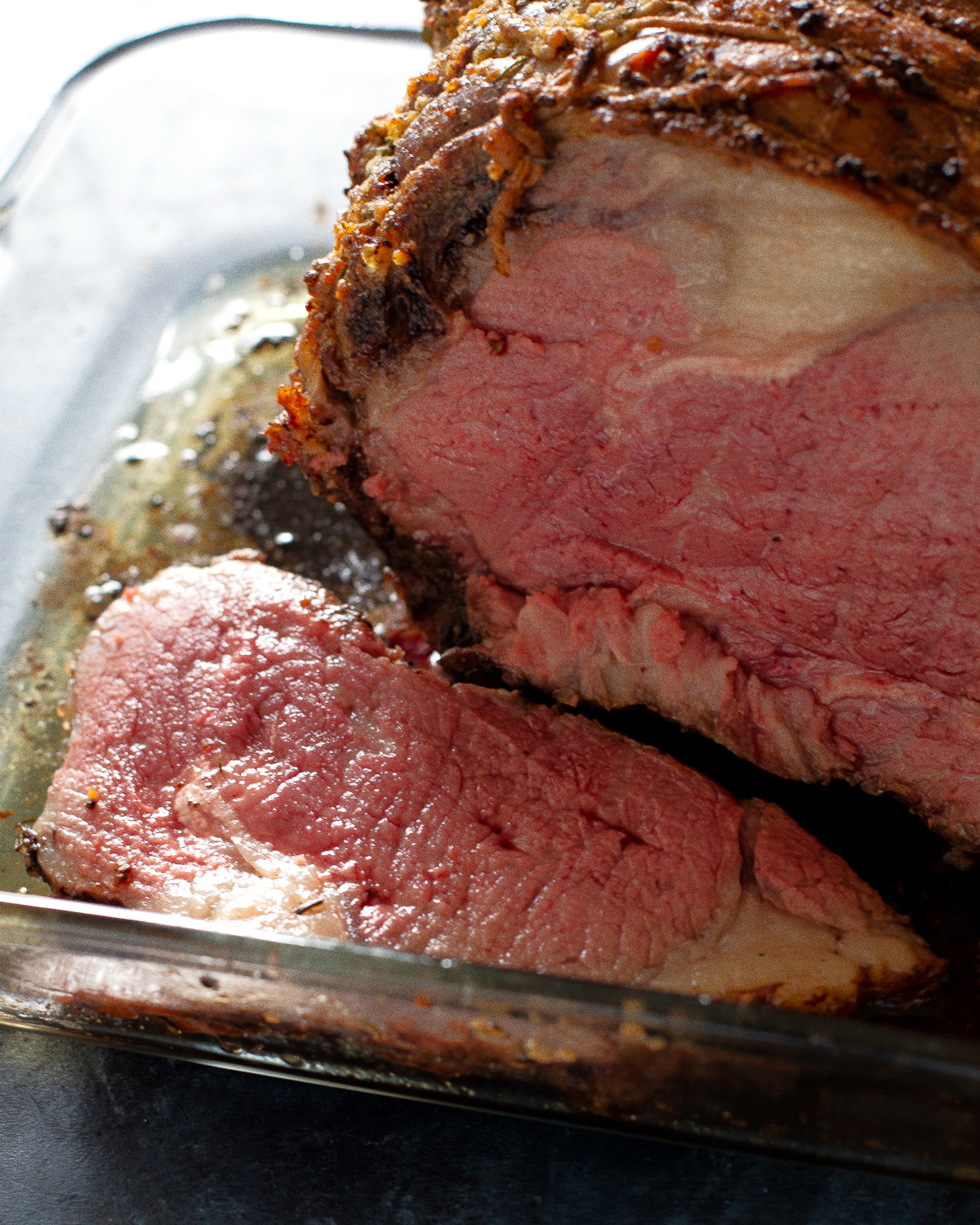
- Edge-to-edge pink. No thick gray band around the outside, just tender beef all the way through.
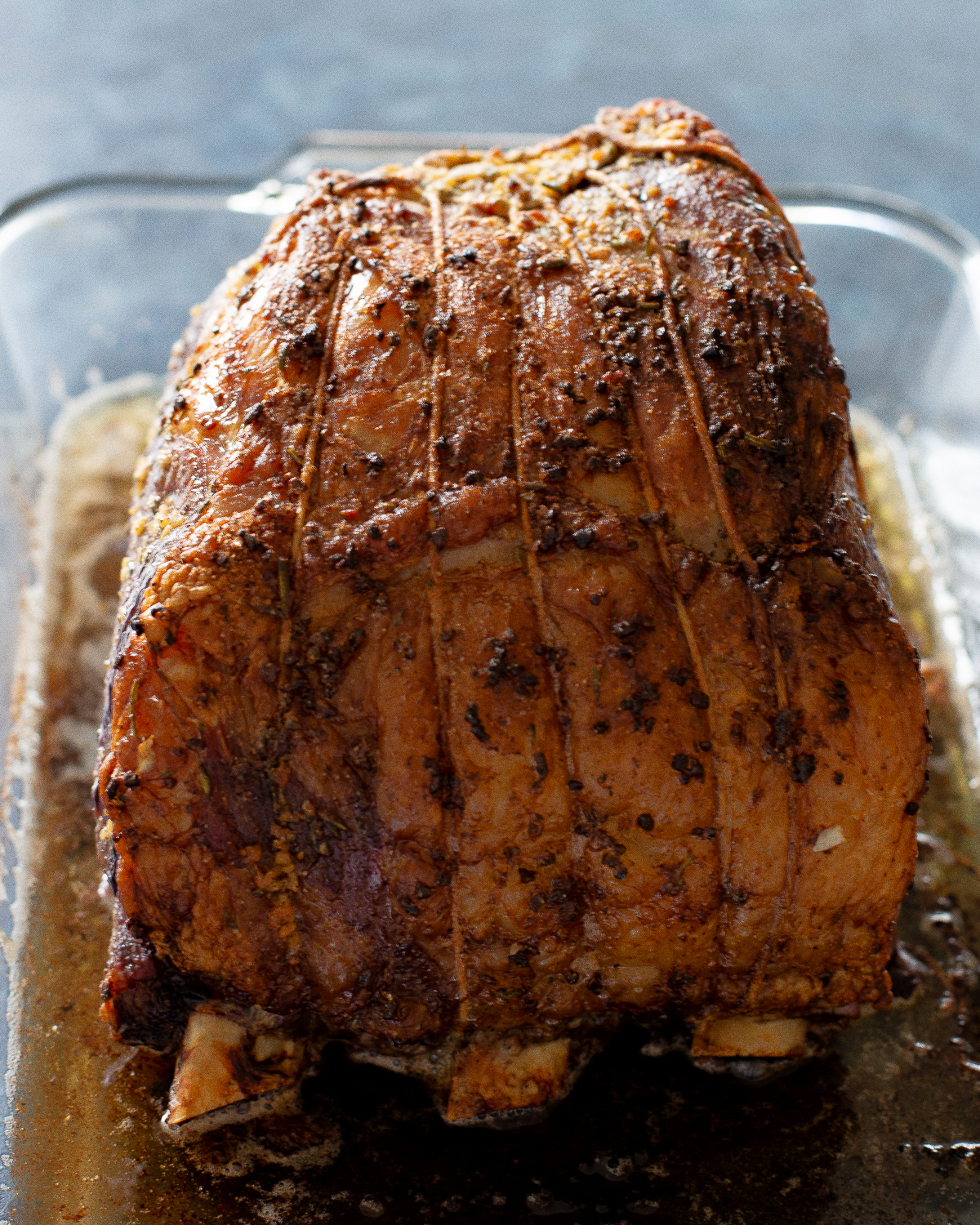
- That crust! Garlic, rosemary, thyme and butter turn into a savory, crackly outside everyone fights over.
- It looks like you worked way harder than you did. Holiday-worthy without the holiday meltdown.
What is prime rib?
Prime rib (also called a standing rib roast) is cut from the rib section of the cow, the same place ribeye steaks come from. That’s why it’s so tender and marbled. “Prime” is often used loosely; most grocery store roasts are actually Choice grade, and that’s completely fine. If you can find Prime grade, it’s extra rich and well worth the splurge.
Bone-in or boneless?
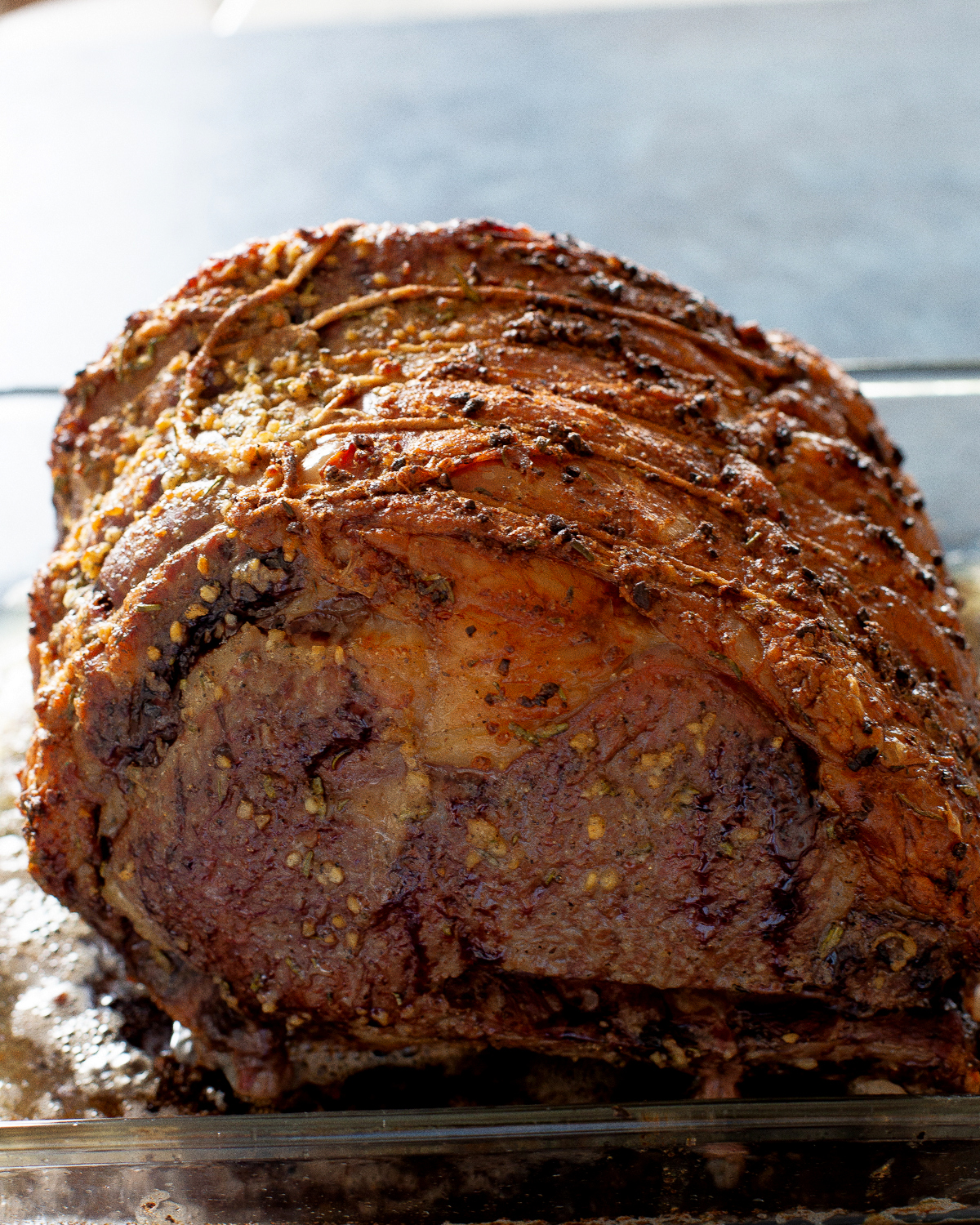
You can go either way. The bones act as a built-in roasting rack, add flavor, and help keep the meat juicy. Ask your butcher to cut the bones off and tie them back on. You get all the benefits, and carving is a breeze. Boneless works too; it will just cook a little faster.
Ingredients you’ll need
- Prime rib roast: bone-in or boneless
- Kosher salt
- Butter: softened, to carry all that garlic and herb flavor.
- Fresh garlic: lots of it. This is not the time to be shy.
- Fresh rosemary and thyme: fresh makes a big difference here.
- Black pepper: coarsely ground.
Full amounts and instructions are in the recipe card below.
Prime rib temperature chart
This is the most important part of the whole post. A good instant-read or leave-in probe thermometer is your best friend. Pull the roast from the low oven at these temperatures:
|
Doneness |
Pull from oven |
Final temperature |
|---|---|---|
|
Rare |
115°F |
120°F |
|
Medium-rare |
120°F |
125–130°F |
|
Medium |
130°F |
135–140°F |
|
Medium-well |
140°F |
145–150°F |
If you have a crowd with mixed preferences, the end pieces will always be a little more done than the center. Everybody wins.
Tips for the best prime rib
- Give yourself a cushion. Start earlier than you think you need to. A finished roast can happily rest for up to 90 minutes, but you can’t rush one that’s not done.
- Save the drippings. They’re liquid gold for au jus.
How to make au jus
Pour off most of the fat from the roasting pan, leaving the browned bits behind. Set the pan over medium heat, add a splash of broth, and scrape up everything stuck to the bottom. Add 2 cups beef broth, a sprig of rosemary and a smashed garlic clove, and simmer for 10 minutes until slightly reduced. Strain, season with salt and pepper, and keep warm.
What to serve with prime rib
- Creamy mashed potatoes or crispy roasted potatoes
- Dinner rolls
- Green beans, asparagus or roasted carrots
- A big Green salad or wedge salad
How to store and reheat leftovers
- Store: Wrap leftover prime rib tightly and refrigerate for up to 4 days, or freeze for up to 3 months.
- Reheat: Warm slices gently in a covered dish with a splash of au jus at 250°F until just heated through. Skip the microwave if you can; it turns that beautiful pink beef gray in seconds.
Prime rib FAQ
Should I cook prime rib covered or uncovered? Uncovered. Covering it steams the meat and you’ll lose that crust.
Do I need to tie my prime rib? Tying helps the roast keep an even shape so it cooks evenly. If your butcher cut the bones off and tied them back on, you’re all set.
What’s the difference between prime rib and ribeye? They’re the same cut. Prime rib is the whole roast; ribeye steaks are what you get when you slice it before cooking.
Is prime rib the same as a standing rib roast? Yes. “Standing” refers to the roast standing on its rib bones while it cooks.
Prime Rib Recipe
Ingredients
- 6-8 pound prime rib roast, (bone-in or boneless)
- 1/2 cup butter, softened
- 6 cloves garlic, minced
- 1 tablespoon fine salt or 2 tablespoons coarse salt
- 1 teaspoon black pepper
- 1 teaspoon fresh rosemary, chopped
- 1 teaspoon fresh thyme, chopped
Instructions
- Pat the roast dry with paper towels. Season all over with the salt. Place on a wire rack set over a rimmed baking sheet. You can refrigerate at this point, uncovered for up to 3 days. When ready, bring the prime rib to room temperature for about 2-3 hours before cooking. This allows the meat to cook evenly.
- Preheat: Position a rack in the lower third of the oven and preheat to 500°F.
- Make the butter: In a small bowl, mix together the butter, garlic, salt, pepper, rosemary, and thyme. Spread evenly over the top and sides of the roast.
- Place the roast bone-side down in a roasting pan or on a rack if using boneless. Insert a leave-in probe thermometer into the thickest part, not touching bone.
- Roast at 500°F for 20 minutes. Reduce heat to 325°F and roast for around 13-20 minutes per pound. Cook by internal temperature not time. Time is just a general guideline. Roast is done when the center reaches 120°F for medium-rare (or desired doneness - see temperature chart).
- Rest: Remove the roast from the oven and let roast rest covered with foil for 30 minutes before slicing. Cut the bones away from the roast if using bone-in, then slice the meat against the grain into ½- to 1-inch slices. Serve with au jus and horseradish sauce.